

“I learned early in my career that being a successful investor is all about picking the right [CEO] … So you need the pattern-matching skills to know the difference between great and not.” - Barry McCarthy
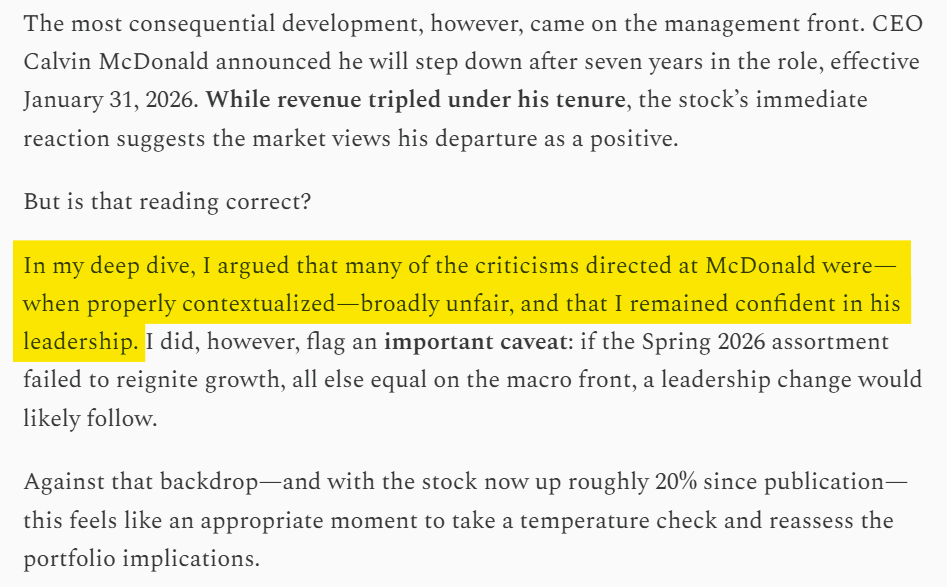
I first wrote about Lululemon in a November deep dive, back when it was Aquitaine’s largest position. The stock subsequently rallied ~32%, largely beginning with the resignation of CEO Calvin McDonald—the casualty of an extended stretch of disappointing results and a budding proxy battle with founder Chip Wilson. While the market had found its scapegoat, I wasn’t sure it had the right one. As I wrote in a follow-up:
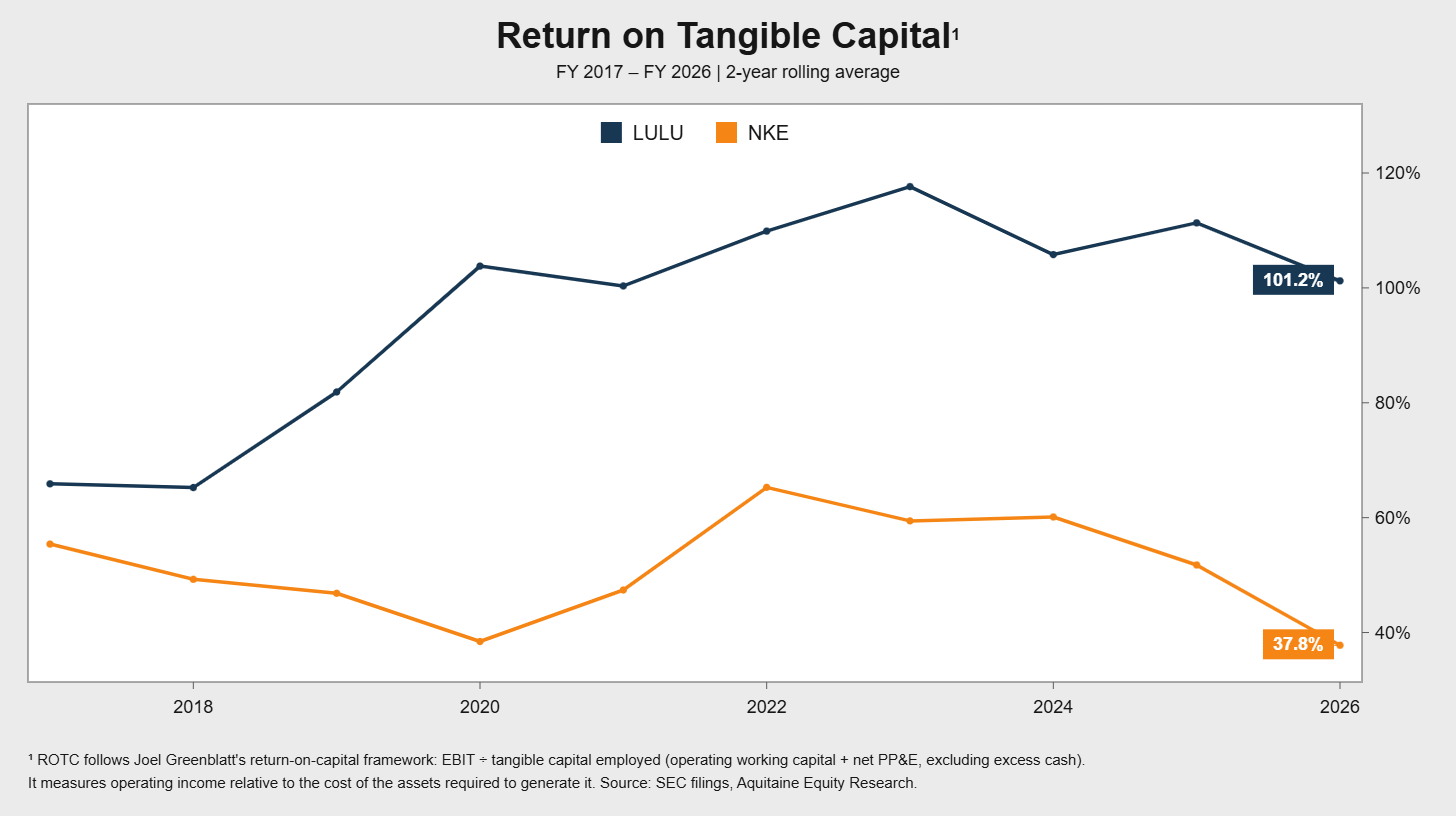
I stayed long anyway, and the reason was price. Even after the rally, LULU traded at roughly 9× consensus 2027 EBIT—cheap in absolute terms, and cheaper still relative to Nike, which traded closer to 19×. For the prior decade the two had traded at roughly the same forward multiple, despite Lululemon’s substantially higher growth and margins.
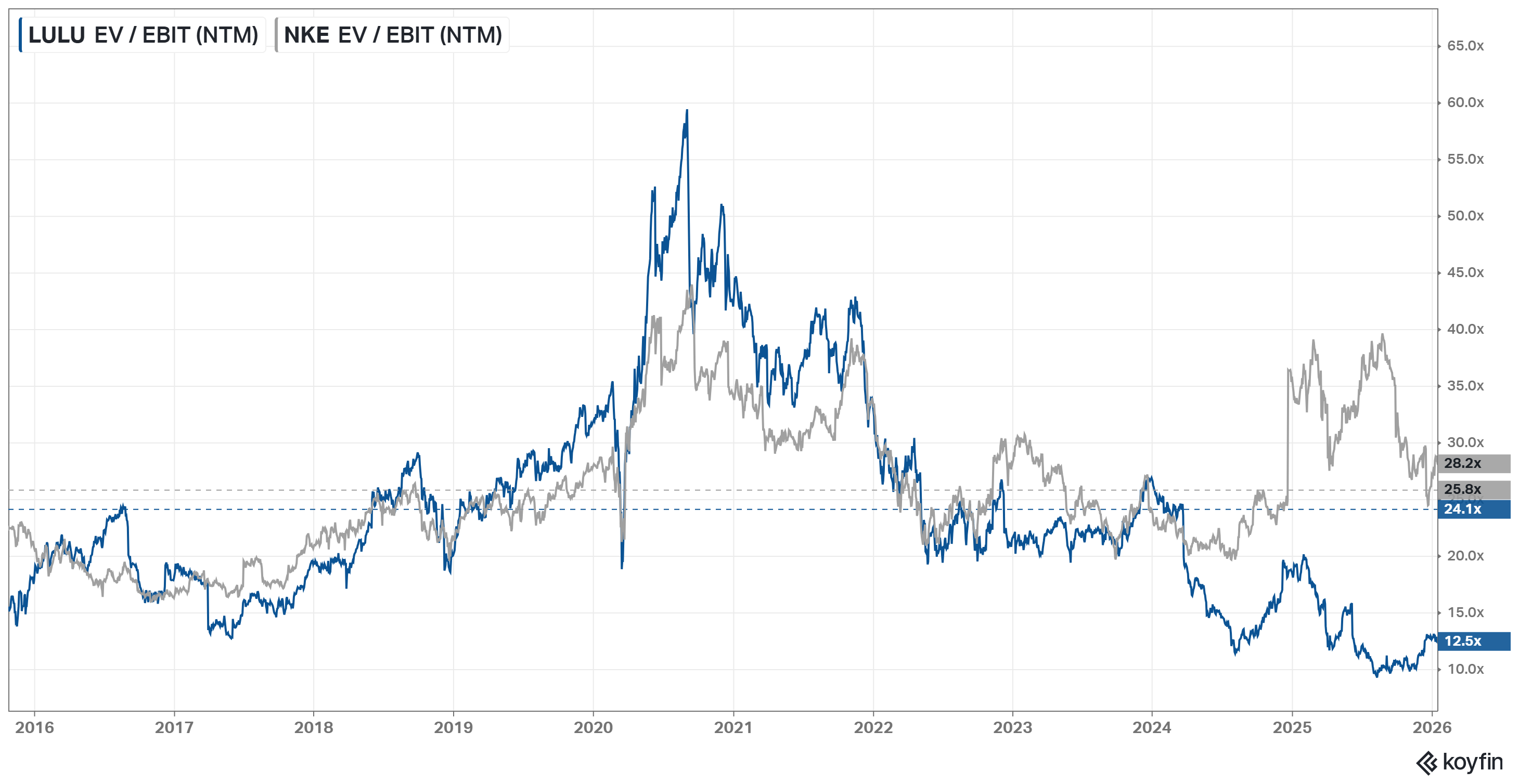
Part of that discount is earned. Lululemon’s run spans roughly 30 years; Nike’s has lasted about 30 years longer, and those additional decades of staying power rightly command a premium. What they don’t do is take anything away from Lululemon’s record—one that would not have been possible without a moat of some kind.
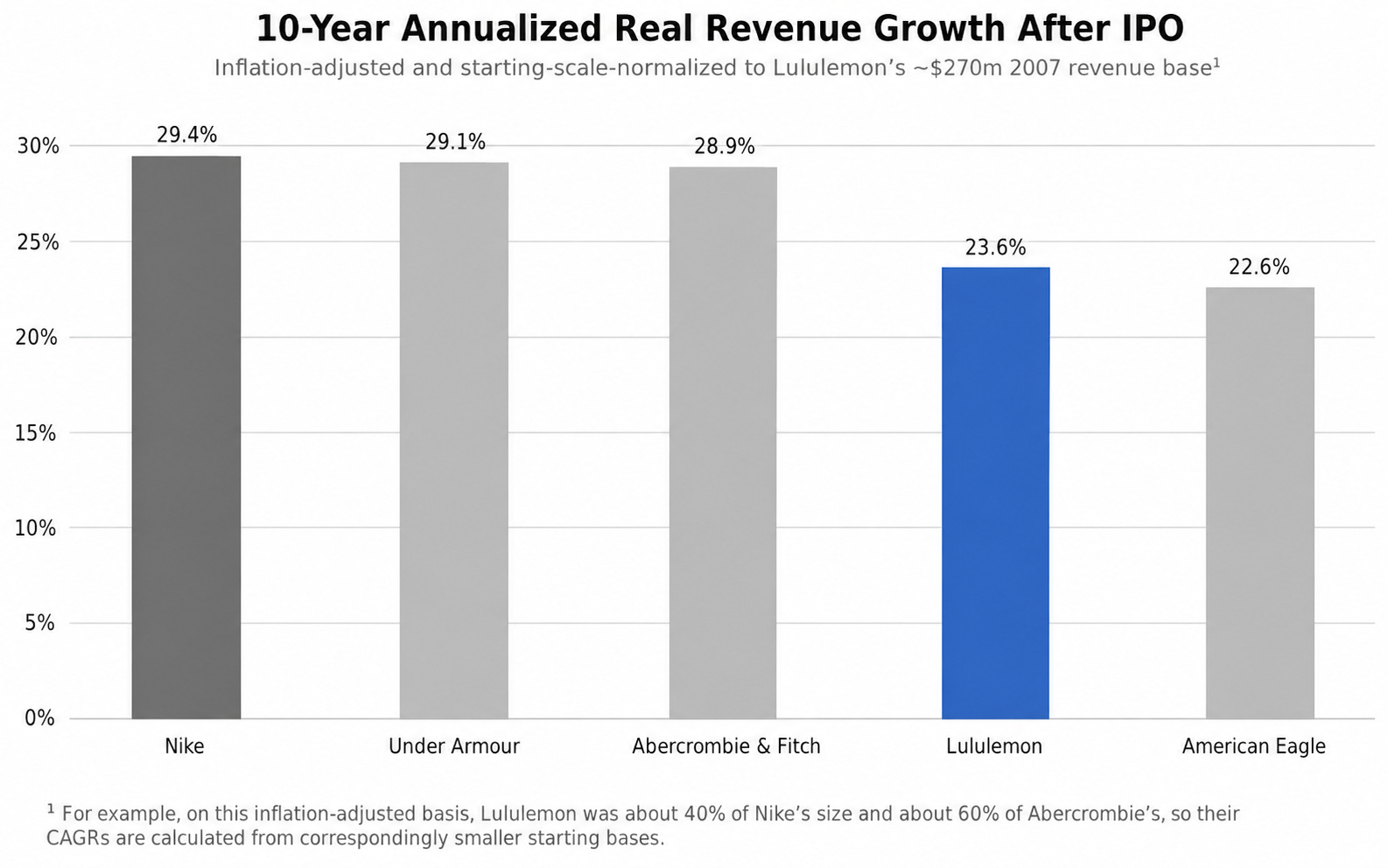
Consider the company’s first decade on the public markets. Its revenue growth, impressive as it was, hardly stood out among its North American peers:
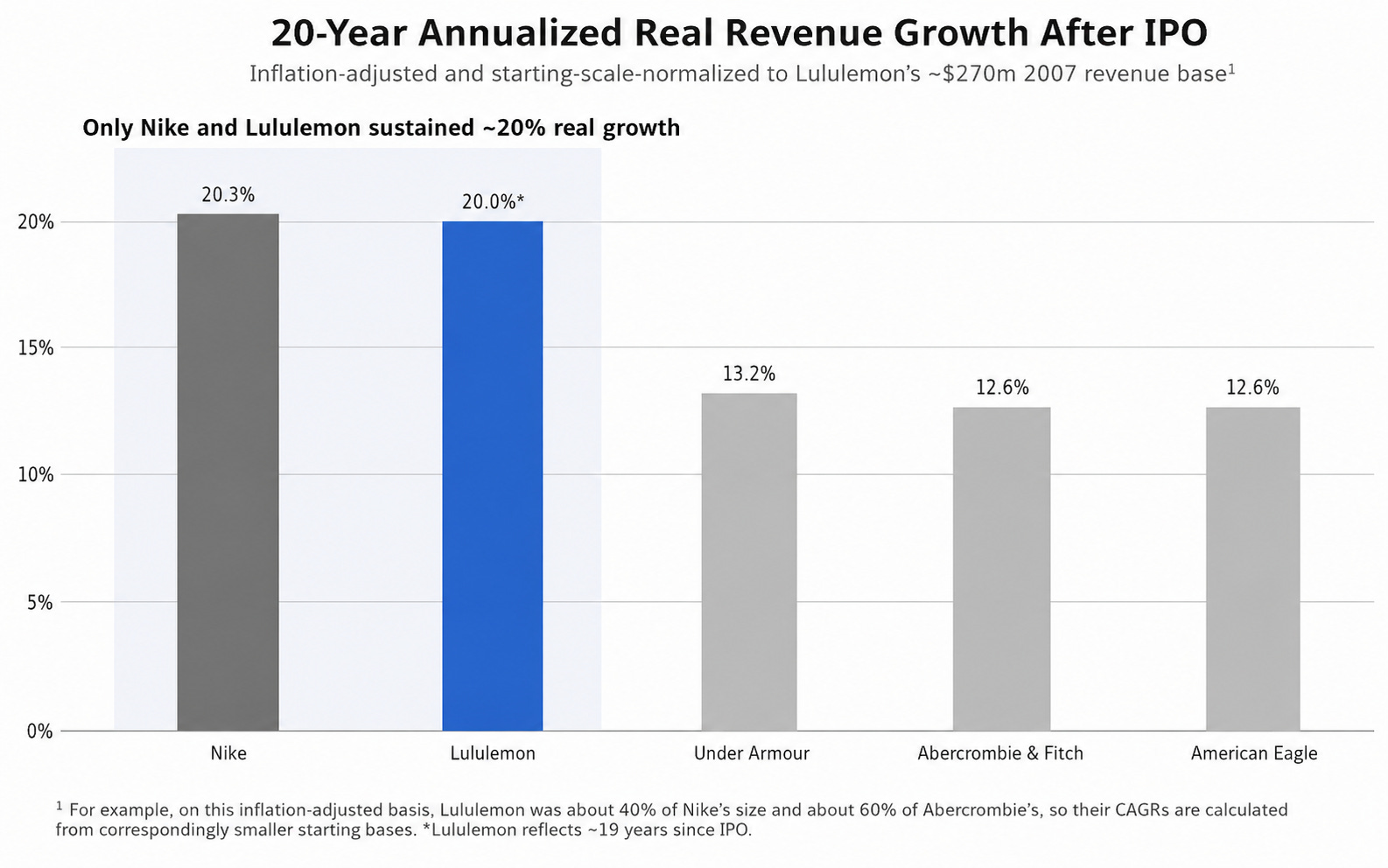
Extend the window to 20 years and the picture changes:
Margins are where it truly separates:
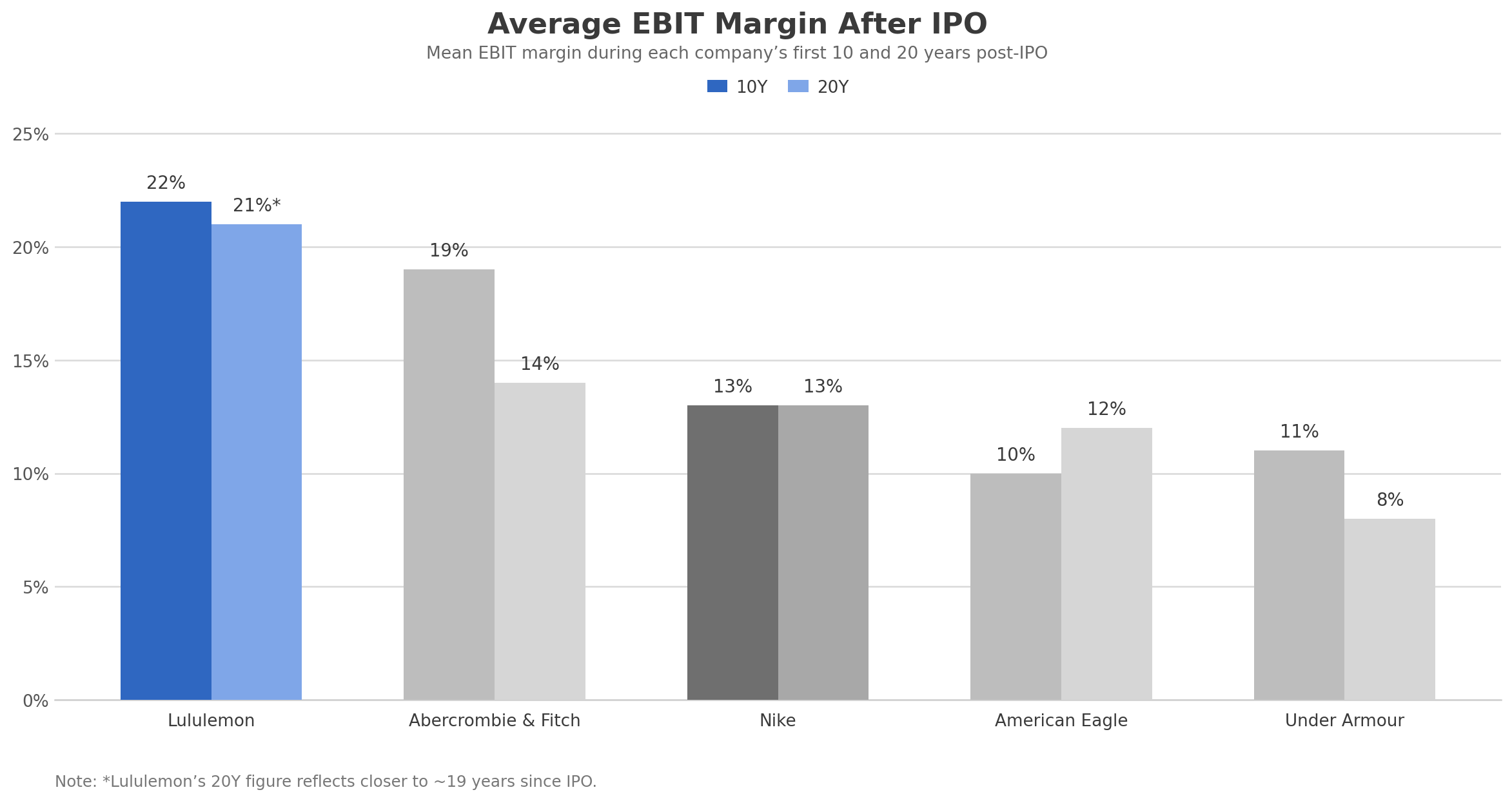
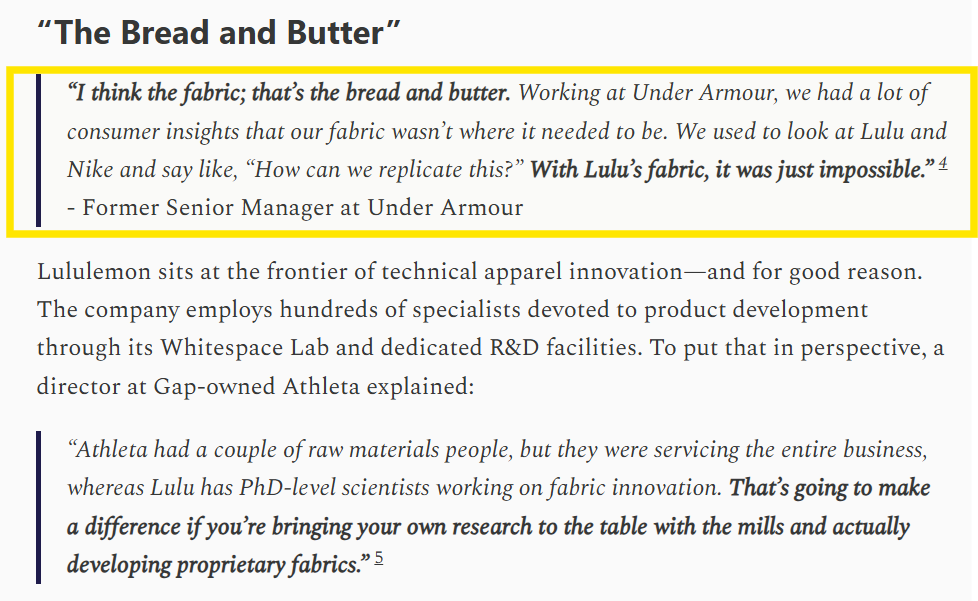
Yes, a premium brand should earn higher margins. But it should not earn margins this high, this consistently, without durable differentiation. I covered the sources of that differentiation at length in the deep dive and won’t rehash them here, though for anyone who missed it, the centerpiece is fabric:
My problem with the Nike discount, though, rested less on these historical parallels, striking as they are, than on the multiyear outlook. Before buying LULU I had taken a close look at NKE, then in its own deep drawdown, around 60% below its all-time high, and wasn’t convinced Elliott Hill was the savior the company needed. (Hold that thought.)
Lululemon, meanwhile, offered a far more plausible path back to meaningful growth: its business outside North America was firing on all cylinders, including in China, where Nike was going backwards, and still accounted for only ~25% of sales in 2024 against nearly 60% for Nike. It also had superior economics, a stronger balance sheet, and, in my view, the better CEO.
With McDonald gone, however, the calculus changed. As a rule, I only invest in a company when I believe its management team, above all the CEO, is as good as or better than its peers (ideally an A+, though those are rare). McDonald cleared that bar, in my view, and he was a large part of why I invested at all. So the question became whether the board could find someone else who cleared it. I was initially hopeful: few jobs in the industry hold greater appeal, so the vacancy was bound to attract the ablest candidates, right?
Perhaps. But hope isn’t an investment strategy, so I surveyed McDonald’s peer group again and arrived at much the same conclusion as before: there were few, if any, obvious upgrades (and the best ones already had jobs). That was the primary reason I cut the position by roughly three-quarters over the following weeks.
The other reason was portfolio management. As I’ve written before, I try to let my winners run and cut my losers, but my contrarian, valuation-sensitive nature tends to get in the way: when the market starts to agree with me, I’m usually inclined to trim, particularly when the agreement arrives on light volume, rather than let it run, much less add. (There are exceptions.) How aggressively depends on three things: position size, how far the risk-reward has narrowed, and the opportunity set. Here all three pointed the same way. I held the remainder as the stock drifted lower into April.
Then came the announcement.
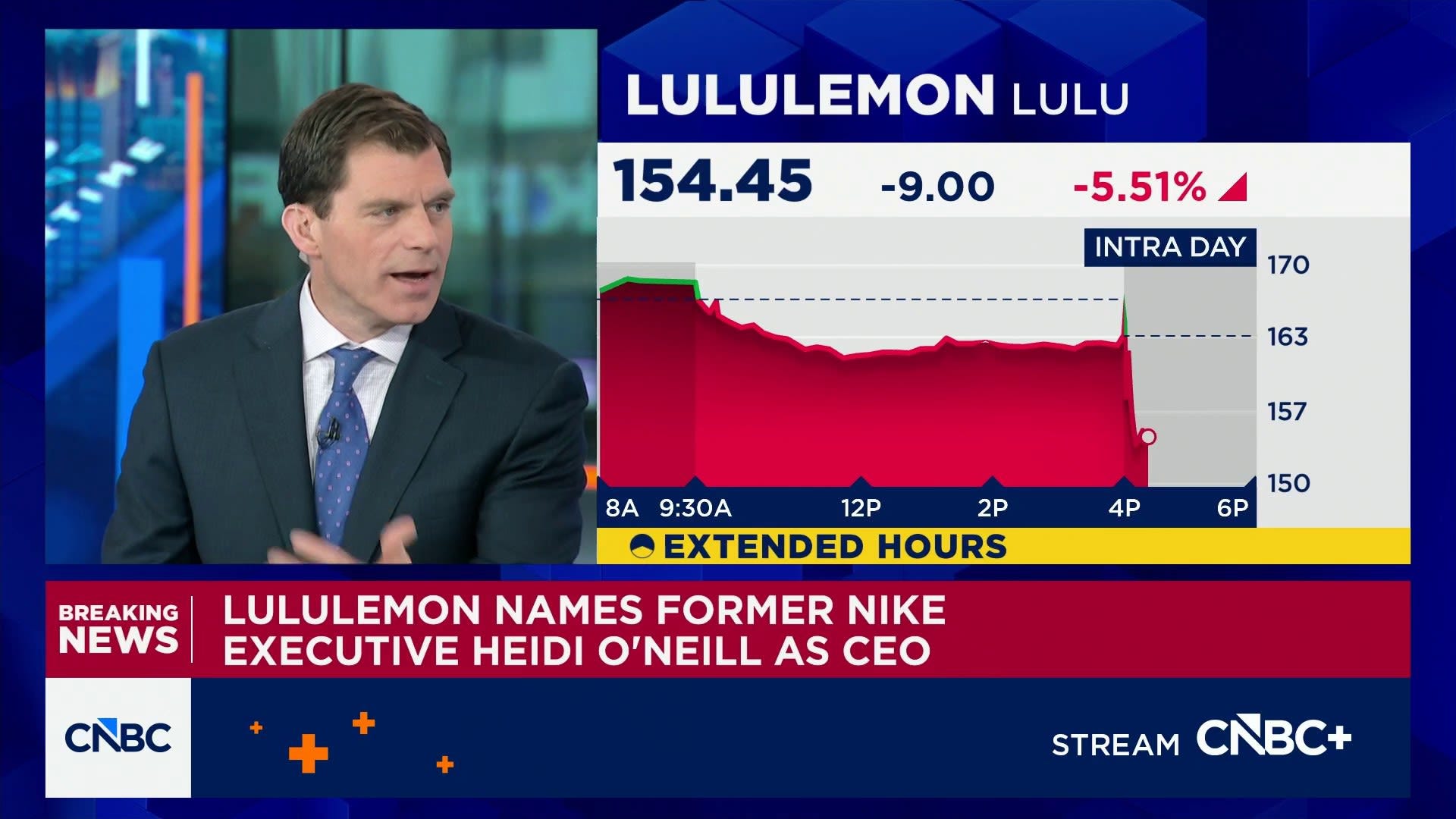
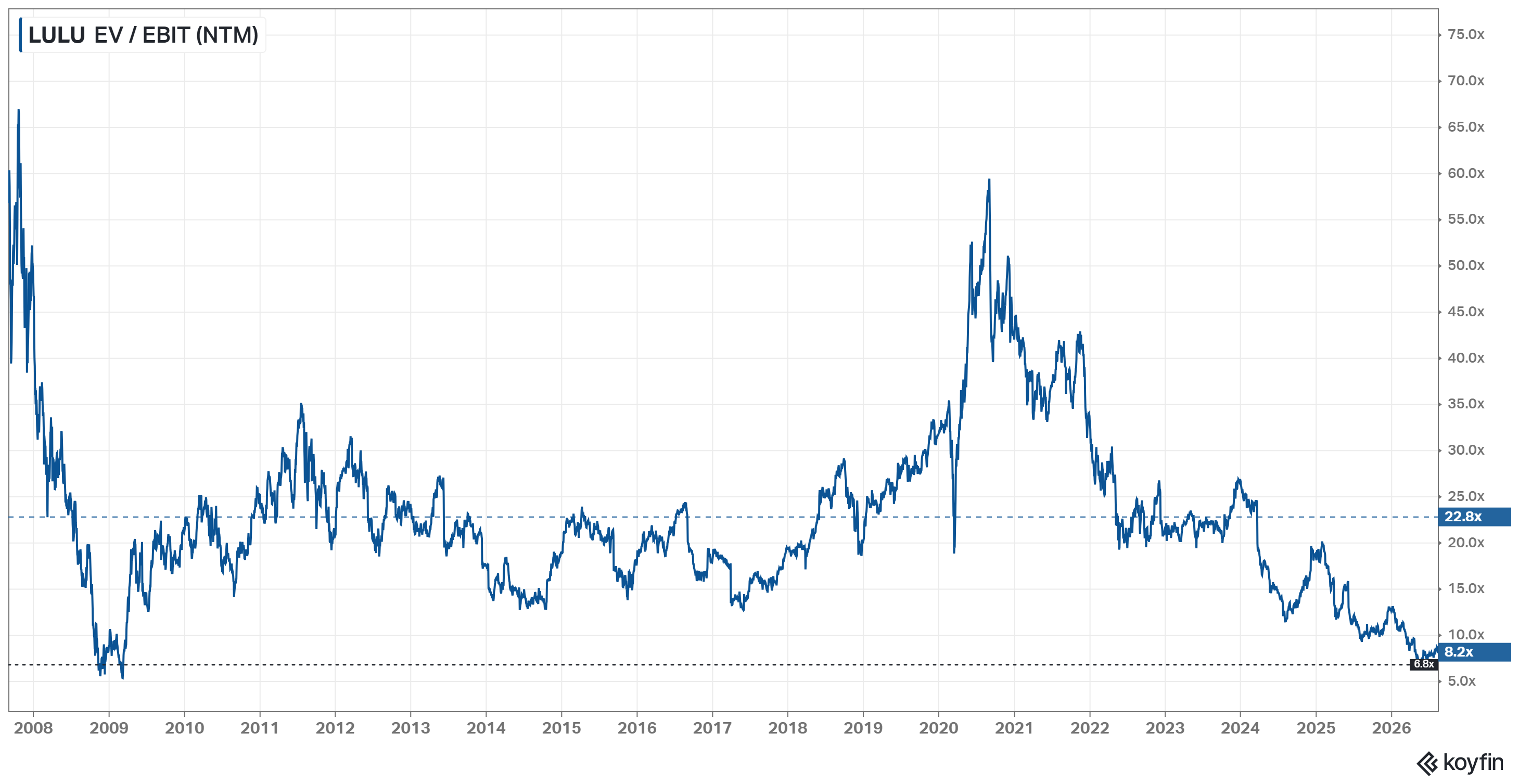
Already trading at its lowest forward EV/EBIT multiple since the financial crisis, LULU gapped down on heavy volume the following day and kept falling. Someone most at ease buying when the crowd is selling should have found that irresistible—provided the thesis still held. It didn’t. So I sold the remainder at precisely the point when, in theory, all the bad news should have been priced in.
Admittedly, that decision had nothing to do with the present value of future cash flows—the only reason long-term fundamental investors are supposed to sell—nor did it stem from a considered assessment of O’Neill. Rather, it was simply based on a hunch (albeit one held with supreme conviction) that the selling would persist.
It did, though foresight had little to do with it: as we will see, investors were reacting to more than just the headline. LULU ultimately fell more than 35% after the announcement, reaching a low of ~$105—roughly 80% below its all-time high—before recovering somewhat. Short interest has more than doubled over the same stretch, from approximately 3.9% to 8.8%, its highest level in a decade.
To be fair, not all of that decline can be traced to O’Neill. June brought disappointing quarterly results and guidance, along with a backlash in China—since largely subsided—over a marketing misfire on the Great Wall. The destination is the same either way: a company that was the crown jewel of its category a few years ago now trades at roughly 8× forward EBIT, which is to say it is priced as an undifferentiated brand with limited growth prospects, if any.
But are things really as bad as they look? Let’s investigate.
The Optics
In keeping with Aquitaine’s no-sugarcoating policy, I will say it plainly: the optics of O’Neill’s appointment could hardly have been worse. (The reality, fortunately, is kinder—we’ll get there.)
Three things made it look especially bad.
First, the communications blunder. In the Wall Street Journal article announcing the appointment, Executive Chair Marti Morfitt was quoted as follows:
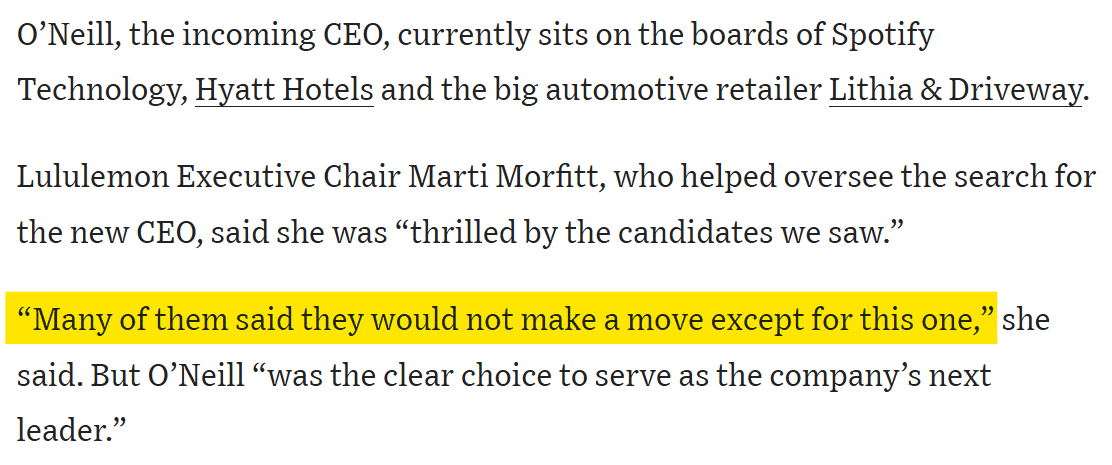
Morfitt’s intended message, no doubt, was that Lululemon had attracted an unusually strong field of candidates and that O’Neill stood out even within it. That is not how it landed. Instead, the quote reads as though O’Neill prevailed because she was the only candidate—“except for this one”—actually willing to move to Vancouver.
Second, the Nike issue. O’Neill spent more than two decades at Nike before leaving in September 2025, most recently as president of consumer, product and brand—until that role was split into three. Whatever the merits of her résumé, the baggage was obvious: her years in senior leadership coincided with a difficult period for Nike, whose stock has badly underperformed over the past decade.
There is also the awkward fact that when Nike needed a turnaround CEO of its own, its board passed over O’Neill in favor of Elliott Hill—a former executive who had retired in 2020. That mattered more to me than it might to most. As noted, I had found Hill (though amiable) rather unnoteworthy—at least by Fortune 500 standards. So if Nike’s board preferred him to O’Neill anyway, what did that say about her?
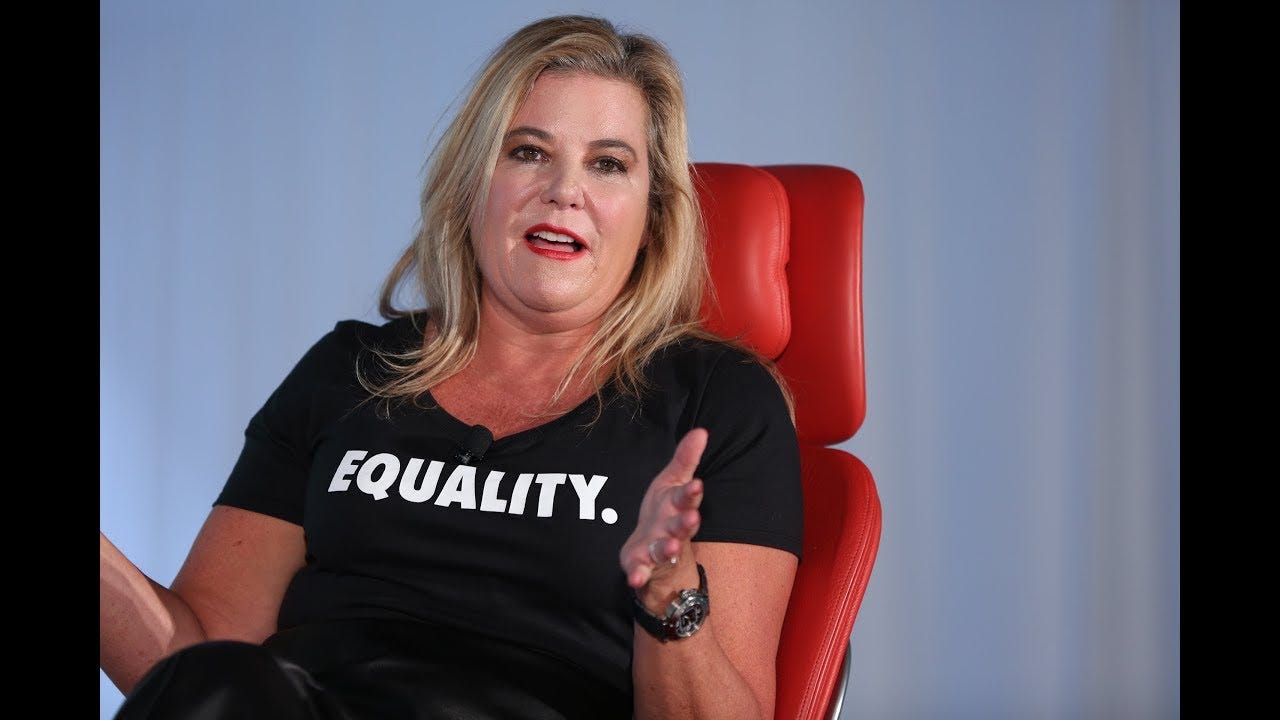
Finally, there was the first-impression problem. After the announcement, I did what I suspect many investors did: searched “Heidi O’Neill Nike.” Among the top results was an interview from 2017, about a year after she had become president of Nike’s DTC business. By the time I arrived, the comments were piling up—none of them kind.
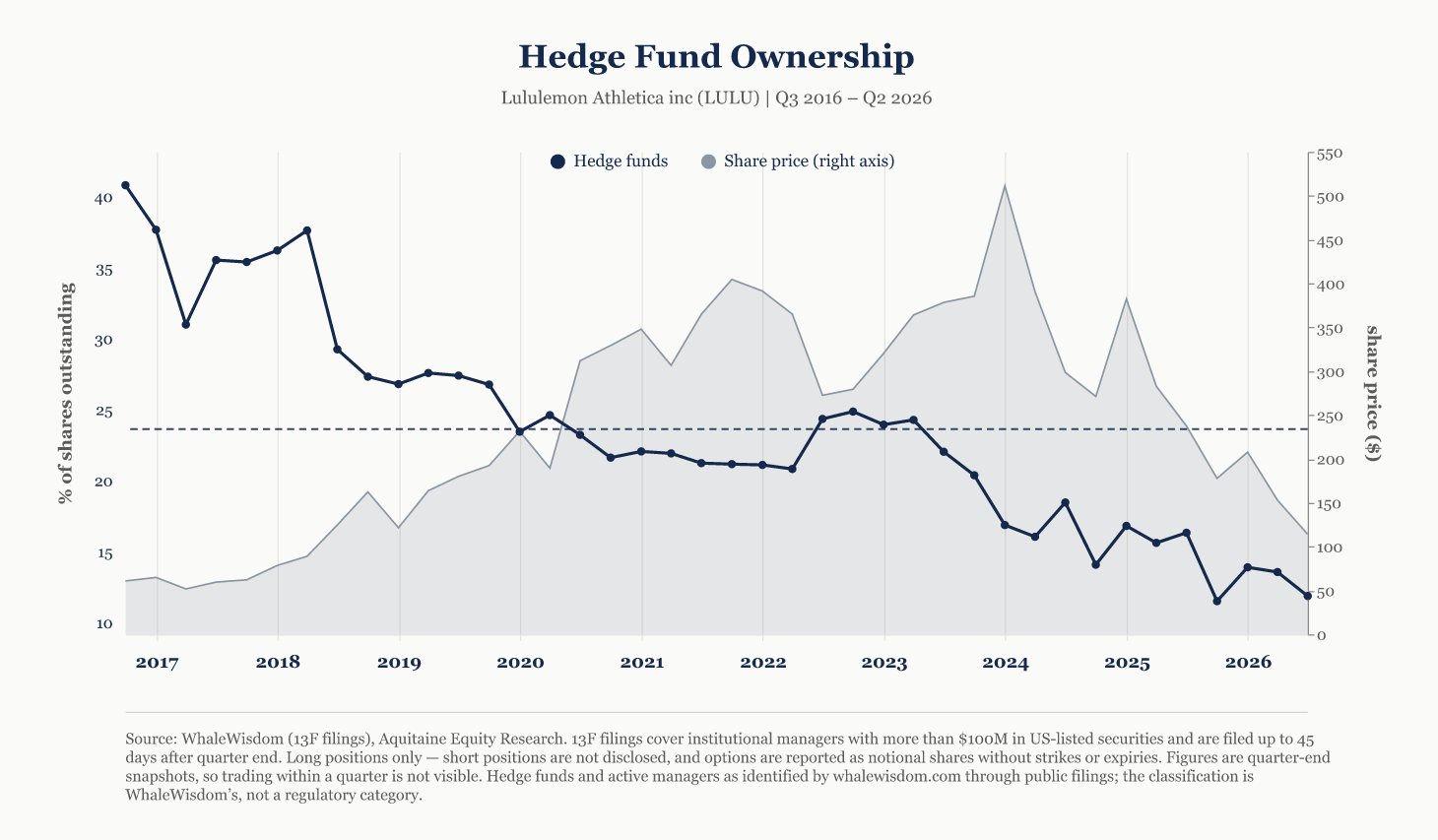
The YouTube comments section can be a merciless place. But it also offers a glimpse into the mind of the retail investor (at least a meaningful portion of it), which, now at roughly twice the size of institutional discretionary managers by trading volume, should not be ignored. That matters more for LULU than for most:
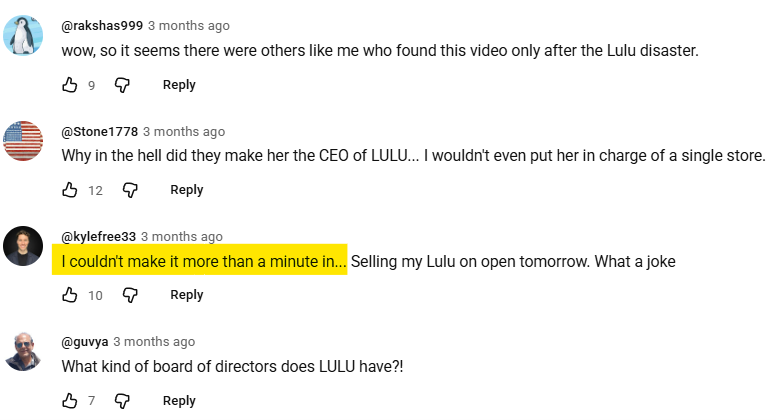
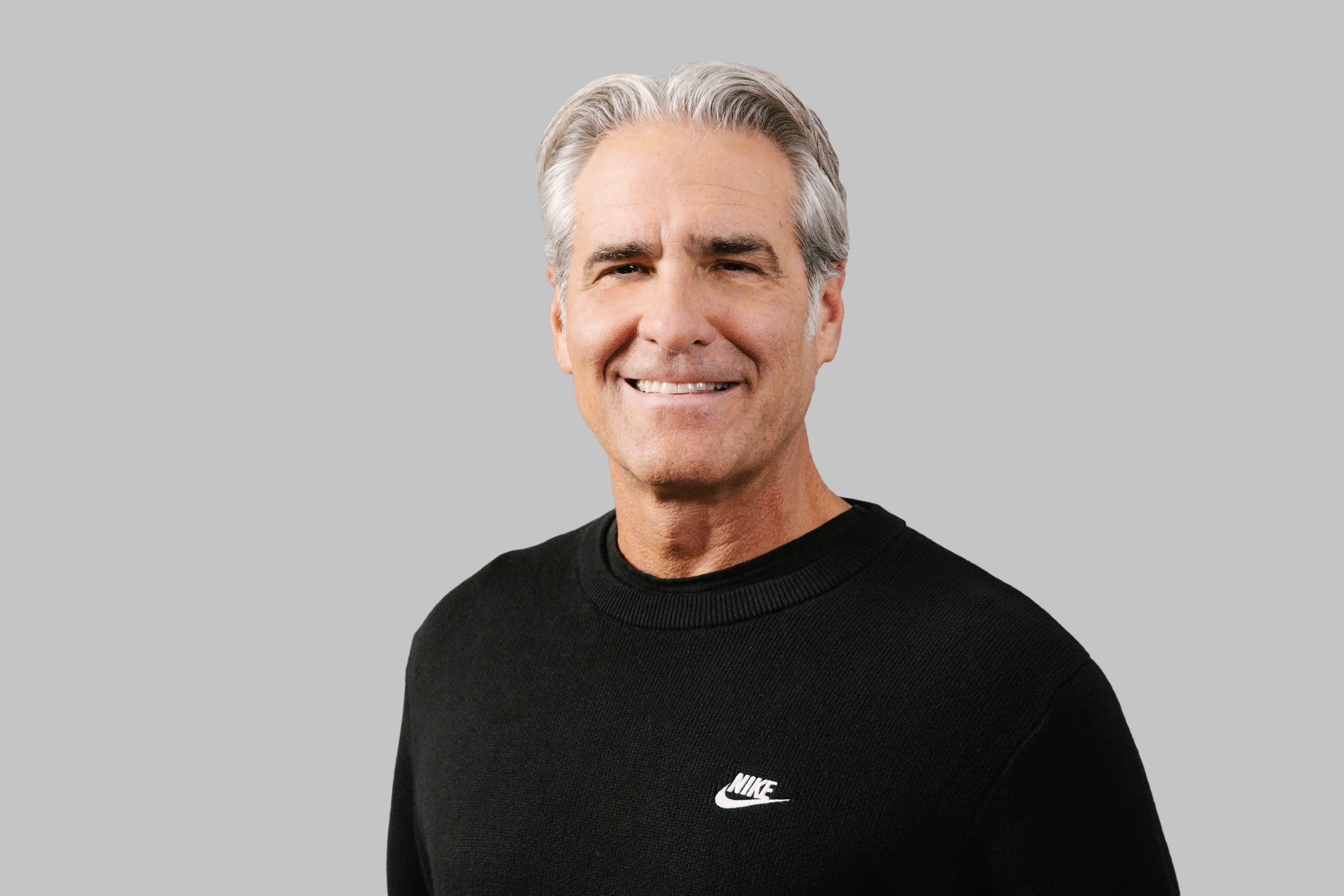
It was not O’Neill’s best showing. She did not project the composure or self-assuredness one would hope to see from the incoming CEO of a troubled consumer brand. That said, I suspect the reaction owed less to the substance of the interview than to the Nike “Equality” shirt—not because equality is controversial, of course, but because the slogan now reads as an artifact of peak corporate virtue-signaling: vague, costless, and almost aggressively unobjectionable. (Nike no longer sells it.)
The 30-minute impression beats the 30-second one, though—something “@kylefree33” (and his fellow commenters, one presumes) didn’t stick around to discover. O’Neill settles as the interview progresses, and in later appearances, particularly from 2021 and 2023, she comes across as more polished and confident.
All told, the market’s reaction seems to have been less a measured assessment of O’Neill’s merits than a rapid pattern-match: a Nike résumé attached to Nike’s struggles, an unflattering old clip, and a botched quote from the board. Of course, that doesn’t make the concerns about her tenure baseless. (More on those shortly.)
The Reality
I opened this piece with a quote from someone whose name will be unfamiliar to many readers. Rather than introduce him myself, I’ll leave that to the hosts of Acquired, who do it with more flair than I could:
“THREE-TIME ACQUIRED SUPERHERO, the one and only Barry McCarthy.”
Having listened to the show for years, I can say they have rarely—if ever—spoken about a guest with such unrestrained enthusiasm. That is all the more unusual because McCarthy is not some storied billionaire founder. He is a career CFO.
McCarthy ran finance at Netflix (1999–2010) and then Spotify (2015–2020), before coming out of retirement to become CEO of Peloton (2022–2024), where he saved the company from almost certain bankruptcy. Peloton was the subject of my second deep dive, published in 2024, and McCarthy was central to the thesis. The stock bottomed at ~$3 a month earlier and reached over $10 a few months later.

I mention that not to toot my own horn, but because the quote is particularly apt—and, more importantly, McCarthy sits on the same board as O’Neill: Spotify’s, where she has been a director since December 2017 and he since 2020. And Spotify’s is not a board that merely checks the boxes.
In Daniel Ek’s telling, rather than assembling directors for corporate-governance optics, he recruited people who had operated at a high level themselves—Ted Sarandos, Tom Staggs, and O’Neill among them—and he doesn’t regard them as being there for him alone. Rather than route everything through the CEO, he routinely sends directors to work through problems directly with the executives running them.
Almost everything the market knows about O’Neill comes from a handful of public appearances. McCarthy and Daniel Ek have spent close to a decade working alongside her (McCarthy first as Spotify’s CFO, then as a director)—observing how she thinks, how she exercises judgment, and how she performs when the cameras are off.
Everything I know about the two of them tells me that if she were remotely as advertised in those comments, she would not have been invited onto that board, much less re-elected every year for nearly a decade. Nor, more obviously, would she have started at the bottom of Nike’s corporate ladder and finished one rung from the top.
Which brings us back to the question hanging over this whole affair: if she’s that good, why did Nike’s board choose Elliott Hill?
The answer, I suspect, is that the decision was more a matching exercise than a referendum on ability. By 2024, Nike’s most urgent problems were merchant-related: bloated inventory and wholesale relationships strained nearly to the breaking point after years of direct-to-consumer overreach.
Hill, a 30-year commercial operator who had led sales and marketplace partnerships, was purpose-built for that repair job. O’Neill’s strengths—product, brand, and consumer—were not what the moment demanded. Now apply the same logic to Lululemon. Its problem is not wholesale distribution; it doesn’t have any. Its problem is product heat and brand energy in its core market. That is precisely O’Neill’s lane.
That still leaves the two concerns about her Nike tenure I mentioned earlier: that she led the DTC push, plainly too aggressive in hindsight, and that her senior leadership years coincided with a decade of share-price underperformance. Both are worth engaging with, and both are far more nuanced than they are usually made out to be. On the first, O’Neill was put in charge of DTC, not asked whether Nike should pursue it; a strategic reorientation of that scale is the CEO’s call, which ought to be obvious but is missing from most of the arguments I’ve seen.
On the second, Nike shares rose to more than $160 by late 2021, largely on the strength of that same DTC push, and were still around $115 in late 2023—more than double where they stood when she took the business over. The decade-long underperformance is, for the most part, a story about what happened after 2021. None of that clears her entirely, but the version in circulation isn’t the strong one.
That leaves one loose thread: can O’Neill communicate with investors?
A chief executive who cannot lay out a strategy crisply, or field a skeptical question without wobbling, pays for it in the multiple. Her 2017 interview was not reassuring on that count, and while her later appearances were considerably better, they were also lower-pressure settings.
For what it’s worth, I do think executives grow into the part, particularly once the title itself confers some of the authority, and she may present differently speaking for her own company rather than as one voice within a much larger one. Still, I can’t rule out the alternative, and her first earnings call will settle more of this than anything I can write here.
What is not in question, however, is her enthusiasm, which she radiates in a way McDonald—more reserved by temperament, though no less committed—simply did not. Whether that carries over a conference line, I don’t know. Inside the building, where morale has surely taken a hit, it has to count for something. And while she speaks with less authority than he did, I’m not convinced it’s the liability it first appears: what reads as hesitancy may be a reluctance to claim more certainty than she has. Gap CEO Richard Dickson is instructive here.
Dickson is about as fluent a communicator as this sector has, speaking with a confidence that seems wholly unburdened by self-doubt—and he has largely earned it. Since taking over in 2023, he has reinvigorated most of Gap’s portfolio, with the company posting ten consecutive quarters of positive comps through 2026. But there is one conspicuous exception: the brand competing directly with Lululemon. Athleta, on Dickson’s early telling, needed only a little patience:
“...we’re just sort of going to get through the next quarter or two as we make the changes we can to the assortment.” (Q2 2023)
“…out of our portfolio, this is a brand that’s operating in one of the most exciting segments in the industry. The performance segment is incredibly rich with opportunity. And while we are a #5 player, we’ve got enormous potential to continue to grow this brand.” (Q3 2023)
Athleta’s comparable sales did improve initially, from a 12% decline in 2023 to roughly flat in 2024. Then the trend reversed: comps fell 9% in 2025, and another 11% in Q1 2026. What was framed as a one- or two-quarter reset has now been pushed out over three years. I raise this not to criticize Dickson, whose record elsewhere speaks for itself, but because conviction in a plan does nothing to improve its odds—and may delay the search for a better one. Which is why I’m reluctant to treat O’Neill’s less commanding style as dispositive.
Athleta is worth holding onto for a second reason. It sits in the same attractive category, under a management team that has fixed nearly everything else it has touched, running a playbook that worked elsewhere in the portfolio. Gap even hired Alo Yoga’s former president, Chris Blakeslee, whose brand had been doubling revenue year after year—and replaced him after two years. Three years on, Athleta’s store base is selling around 30% less than it was. That’s worth bearing in mind before turning to Lululemon’s own numbers, which are substantially better—around -7% over the same period—and about to look ugly anyway.
In sum, I think the odds that O’Neill rises to the occasion are better than the market is underwriting. She may not prove an upgrade on McDonald. But she brings a different set of strengths, and they may be precisely the ones Lululemon needs. Its needs, however, are not small.
Trial by Fire
O’Neill takes over in September. This is the business she inherits:
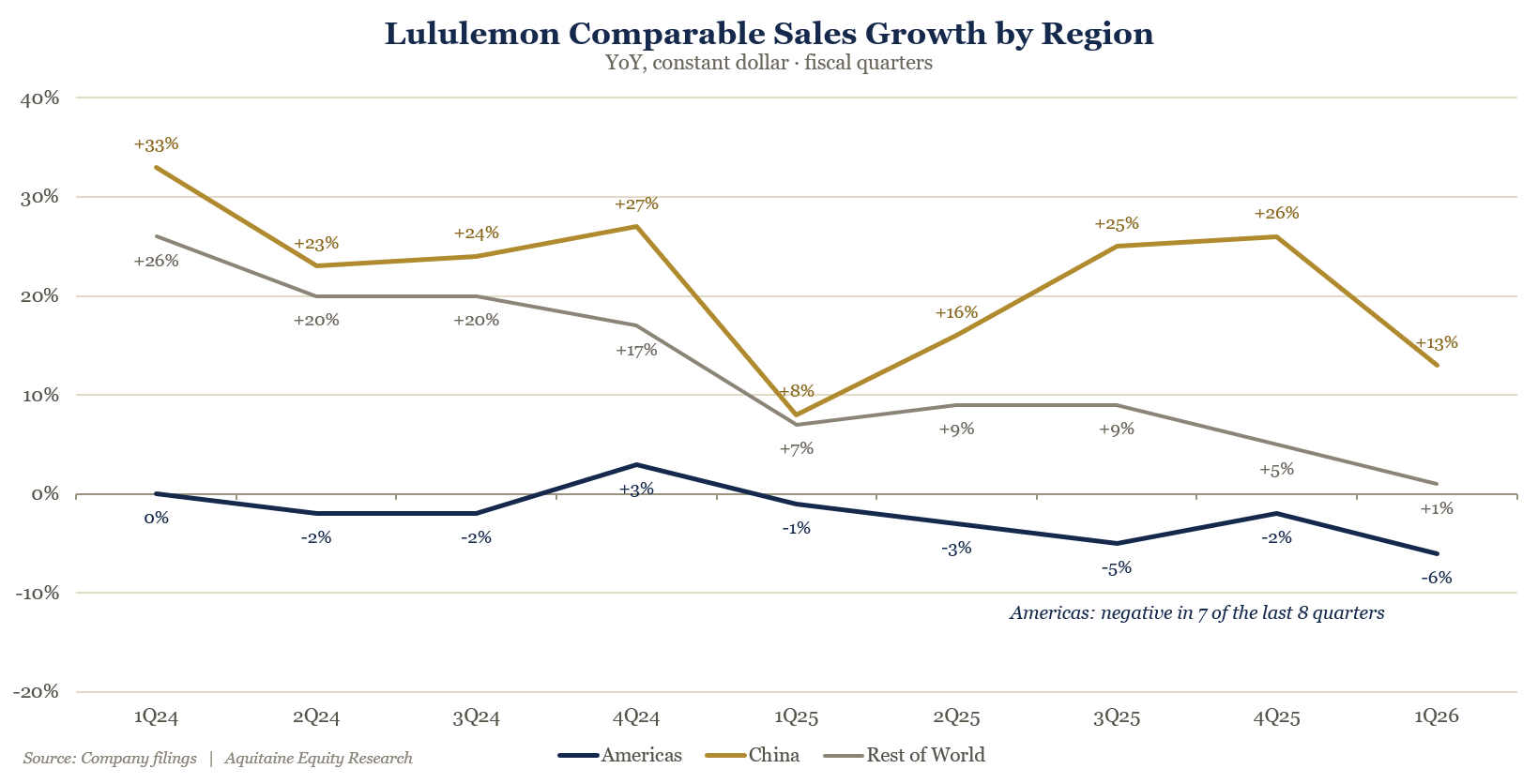
Management’s FY2026 guidance offers no reprieve. Revenue is expected to be roughly flat, with the Americas down high single digits, China Mainland up ~20%, and Rest of World up mid-teens. On my estimates, that implies comps of about -10% in the Americas—Athleta territory—alongside +10% in China and +5% in Rest of World. Operating margin is guided down 380 basis points from 19.9% in 2025 to ~16%, partly on tariffs. Grim, yes, but two things temper it.
First, Lululemon has historically guided conservatively:
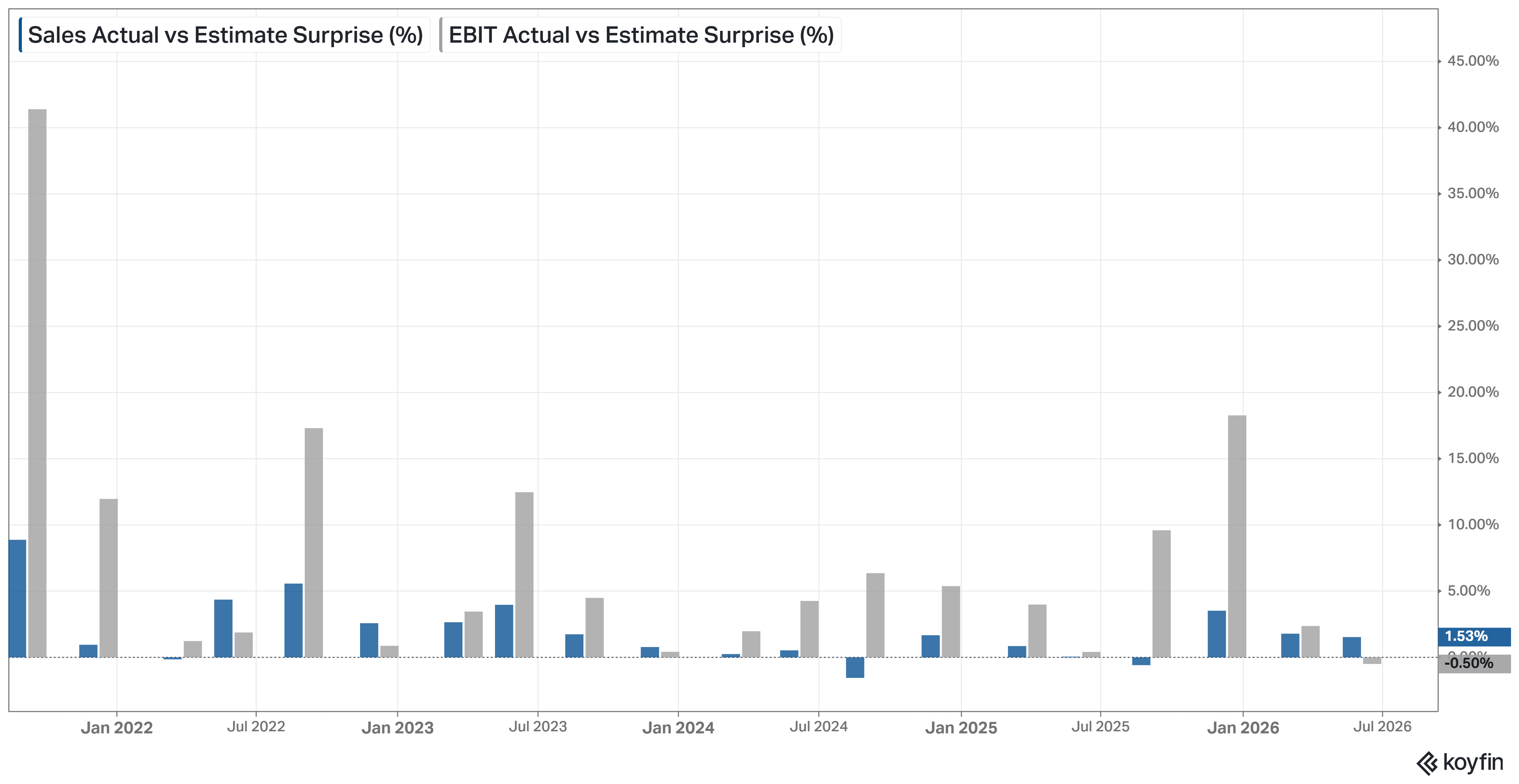
Second, and more important, the base from which it is declining. As I discussed at length in my deep dive, challenger brands Alo and Vuori sit at the center of the bear case—Alo in particular. My argument then was not that the threat was imaginary. It was that the familiar story, in which these athleisure “disruptors” were simply eating Lululemon’s lunch, flattened a far more complicated picture.
For example, Lululemon’s U.S. stores were generating more than $8 million in annual sales on average, against my estimates of roughly $2.5–5 million for Alo and Vuori. As a director of distribution at Vuori put it in January 2025:
“[Lulu’s] brick-and-mortar performance is unbelievable … They have just sheer volume going through these stores.” (Alphasense transcript)
Even with the recent weakness, foot traffic data suggests the gap remains similarly wide:
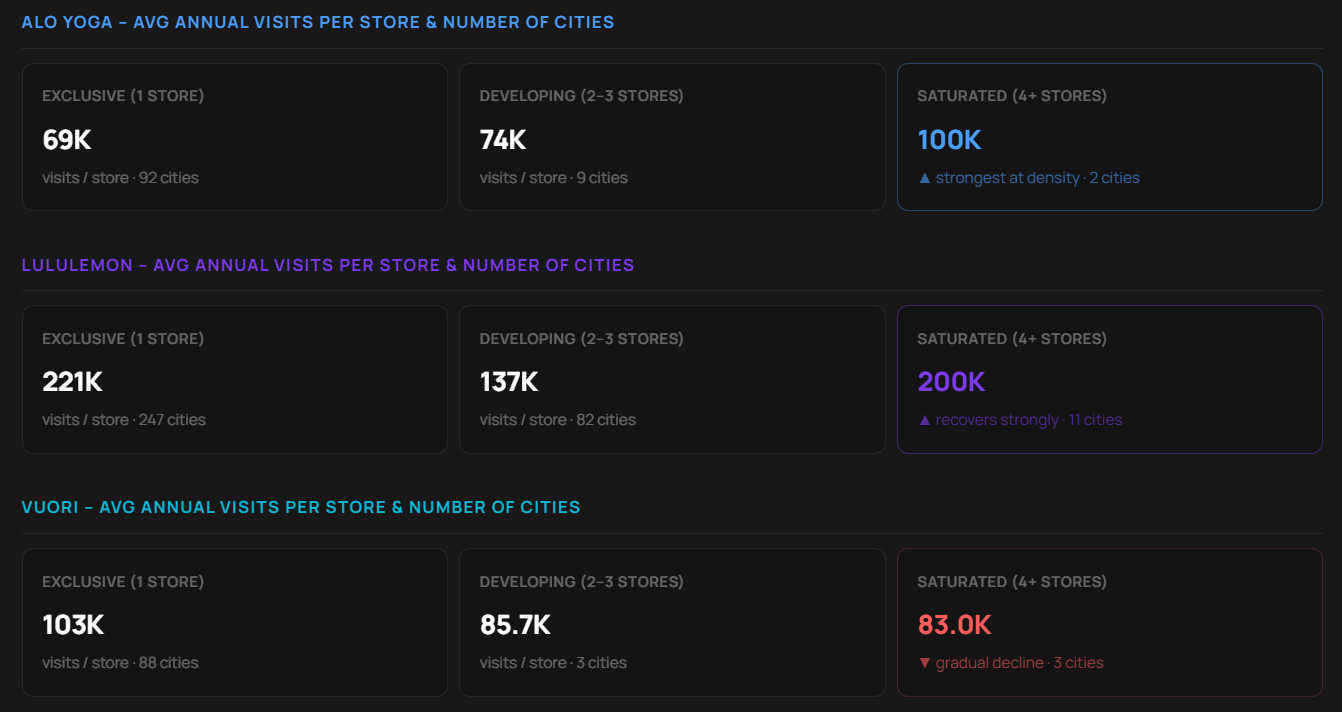
Lululemon also led Alo on (Google) store ratings—3.85 stars against 3.2 across the four states with the highest store density—and retained customers at roughly twice the rate. It scored far higher with its own employees, too: 81% would recommend working there, against 45% at Alo (Glassdoor). Even executives at competing brands acknowledged its edge in product quality. As a VP of merchandising at Fabletics observed last July:
“When I look at someone like Alo, it’s obvious that the quality of fabric that they’re composing and manufacturing is different. That’s where I believe [Lulu] really has a leading edge on everyone.” (Alphasense transcript)
Since November, though, momentum has moved further in Alo’s favor:
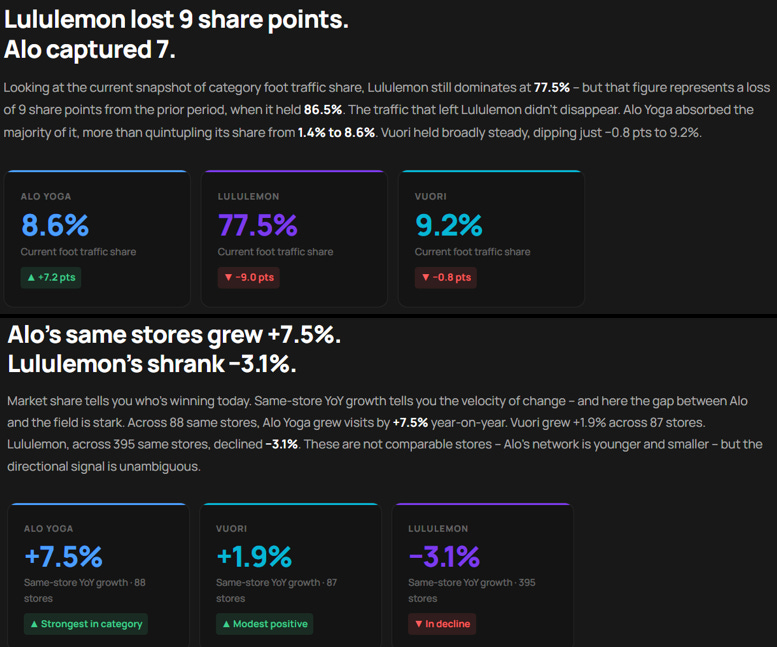
A path back to positive U.S. comps therefore looks increasingly unlikely, at least anytime soon—a problem, because at ~56% of LTM revenue, the U.S. is the only thing that will meaningfully re-rate the stock. Without it, no plausible rate of international reacceleration moves the needle.
Yet it is not out of reach, because the U.S. remains considerably underpenetrated. Lululemon operates roughly 1.1 stores per million people there, against ~1.7 in Canada, and U.S. revenue, which peaked at about 5× Canadian revenue in 2023, has since slipped to ~4.4× despite a population 8.5× larger.
Parity with the home market is unlikely, of course. But the gap is wide enough that McDonald wasn’t merely drinking his own Kool-Aid when he said that there was still meaningful share to take in the U.S. The question, then, is not whether Lululemon can return to positive comps in its core market, but whether it will, and if so, when.
Regular readers know Aquitaine insists on catalysts. Here it was a meaningful improvement in the assortment beginning in 2026:
Timing matters, too. Much of the current assortment still reflects the tail end of the former Chief Product Officer’s work, given an 18-24 month design cycle. The first full* season shaped by the new creative director won’t arrive until Spring 2026 … And by McDonald’s account, this design team—comprised of both seasoned and newly hired design leads—is “the best that we’ve ever had in the history of this organization.”
I need to correct one point from that passage. I wrote that spring would be the first “full” season shaped by new creative director Jonathan Cheung, who joined in early 2024. McDonald actually said Cheung’s influence would begin in spring 2026 and continue increasing throughout the year.
That leaves a critical uncertainty. If not much of the current assortment reflects Cheung’s work, the catalyst is still ahead, and the revised guidance may prove overly conservative. If most of it does, the catalyst has already arrived—and landed flat.
The last earnings call provides a clue. Management said it had shortened the mainline product-development process from 18–24 months to 15–16 months and is targeting 12–14. That points closer to “most of it” than “not much.” Either way, essentially the entire assortment should reflect Cheung’s work by late 2026, so the question resolves within a quarter or two. Under either reading, the ~10% implied comps decline is not reassuring. And if the new direction isn’t resonating, O’Neill can change the story in a quarter; she cannot change the product in less than a year.
Conclusion
So I’ve re-entered LULU with a small position at ~$117. Small, because the case now rests on a person who has not yet run a company, and because the evidence that would confirm or break it is still a quarter away. At roughly 8× forward EBIT the market has written off the brand and the incoming CEO together, which is ordinarily the sort of setup I’m happy to underwrite. But conviction has to be earned, and O’Neill hasn’t yet had the opportunity to earn it.
Three things would move me to add, and I’d want all three. A first call with investors in which she lays out a coherent plan for the U.S. business and handles the inevitable skepticism without wobbling. A comps trend that stops deteriorating, which the guidance already contemplates and the market plainly does not believe. And confirmation that the China backlash proves to be mostly reputational rather than financial. The reverse gets me out. If the refreshed assortment is now largely on the shelves and U.S. comps keep sliding anyway, then the catalyst I originally underwrote has failed and the next one is a year away at best.
Thanks for reading. If you enjoyed this post, please give it a like below or share it with your network—it really helps. Until next time.
Disclosure: I and/or accounts under my control hold a position in Lululemon. This is not investment advice, but my opinion as of today, which may change quickly and without prior notice. Readers are encouraged to conduct their own due diligence. Some quotes may have been lightly edited for clarity and relevance.
Nice work - an original and refreshing take on the new CEO.
Even if she was responsible somewhat for what went wrong at Nike, her experience (of having made those mistakes) would probably be an asset for Lululemon.
I think maybe the more interesting question though is - has the market lowered the bar so much that Heidi only needs to be an average CEO for LULU to be a good investment candidate?
Great businesses can perform with below-average CEOs, good businesses need average CEOs, only poor businesses require great CEOs.
Which is Lululemon?
any new thoughts after earnings?